- October 14, 2026
- By: Thortex Dumpsters
- in: News
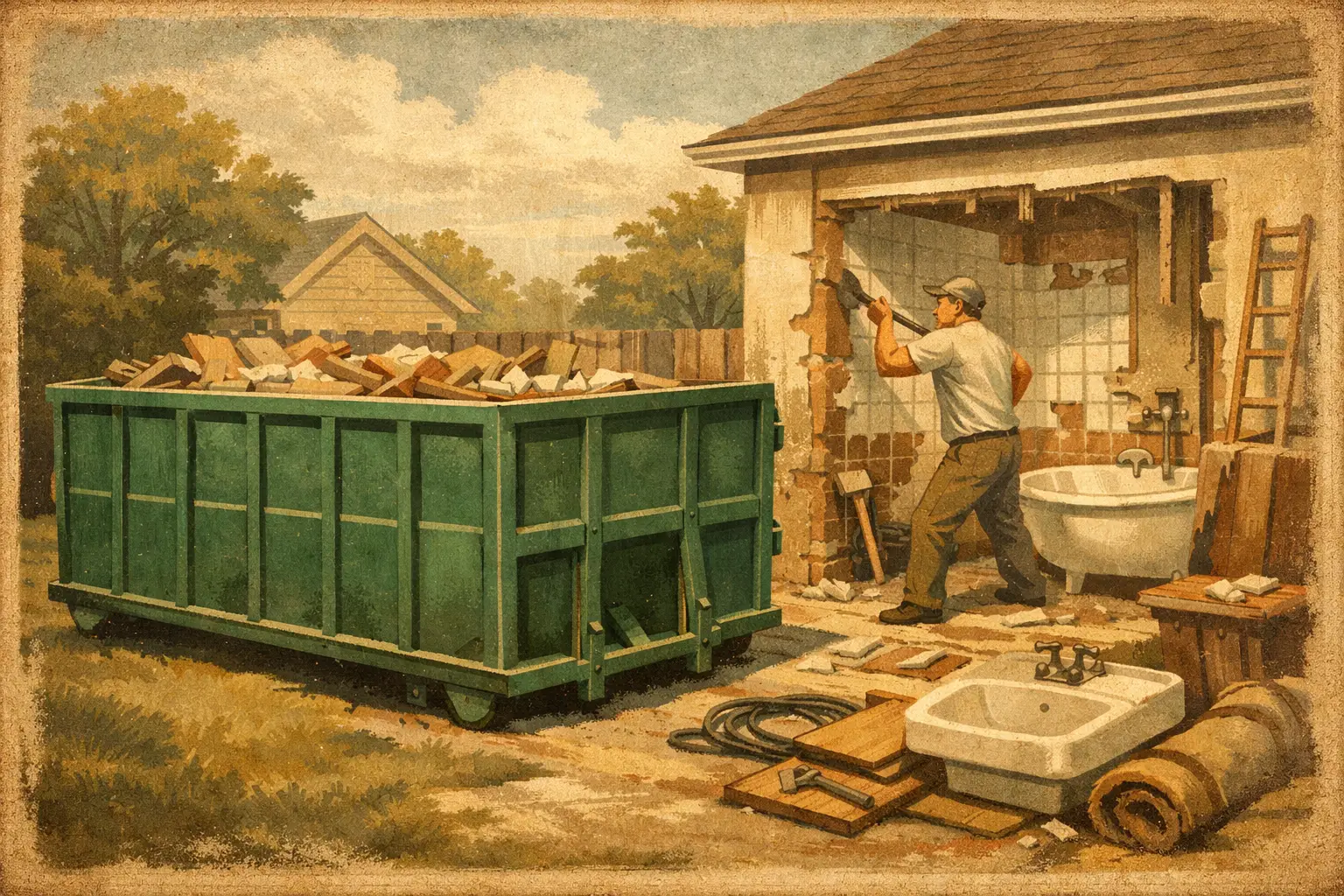
A bathroom remodel can make a small room produce a surprising amount of debris. Old tile is heavy. A torn-out vanity takes up more room than expected. Drywall, flooring, packaging, fixtures, and damaged subfloor can pile up fast once demolition starts. A dumpster rental for bathroom remodel work gives you one place to keep that mess contained instead of turning your driveway, garage, or job site into a stack of disposal runs.
For many Knoxville-area homeowners and contractors, the biggest benefit is not just capacity. It is keeping the project moving. When demo debris has a clear place to go, installers have room to work, the property stays safer, and you are not losing half a day trying to fit broken tile into the back of a pickup.
A single cosmetic update may not need a roll-off dumpster. If you are replacing a faucet, mirror, and light fixture, regular trash service or a small haul-away solution may be enough. But once you are removing tile, a tub, a shower surround, cabinets, flooring, drywall, or a vanity, disposal becomes a real part of the job.
A dumpster is often the practical choice when you are handling the demolition yourself, working through the project over several days, or remodeling more than one bathroom. It also helps during a larger renovation where the bathroom is only one part of the work. Rather than making repeated trips to a transfer station and sorting out what fits in your vehicle, you can load debris as it comes off the walls and floor.
THORTEX Dumpsters provides 20-yard roll-off dumpsters for homeowners, landlords, property managers, and tradespeople who want a dependable place for non-hazardous renovation debris. If you would rather not do the lifting, full-service junk removal can be a better fit. The right option depends on whether you want to load at your own pace or have a crew handle the heavy work.
Bathroom debris can be deceptively heavy. A 20-yard dumpster has generous room for bulky items such as a vanity, tub surround, cabinets, drywall, and packaging. But tile, mortar, cement board, porcelain fixtures, and cast-iron tubs add weight quickly. A container that looks only half full can still be approaching its allowable payload.
Before you schedule delivery, make a realistic demolition list. Include the floor tile and underlayment, shower walls, tub or shower unit, vanity, countertop, toilet, drywall, insulation, doors, trim, and any damaged materials you expect to find behind the walls. Water damage and old flooring layers can add more debris than the original plan suggests.
This is where an honest conversation before delivery saves trouble later. Tell your dumpster provider if you expect a large amount of tile, concrete, brick, dirt, or other dense material. Weight limits and disposal rules apply, and heavy debris may require a different loading plan. Clear pricing up front is far better than guessing after the container has been loaded.
For a standard bathroom remodel, a 20-yard roll-off can provide useful breathing room. It is large enough to hold demolition debris without forcing you to pack every item like a puzzle, and it can also handle boxes, old cabinets, and debris from related work in an adjacent room.
Still, bigger is not automatically better. A container needs a suitable delivery spot, and a bathroom project with a high volume of dense tile may be limited by weight before it is limited by space. The best choice comes down to the material mix, not simply the square footage of the room.
Start by placing flat, heavy materials low in the container. Break down cabinets and large boxes when practical, then load longer pieces in a way that keeps the pile balanced. Keep debris inside the walls of the dumpster. Nothing should stick out over the top or hang over the sides.
That rule is about more than appearances. A roll-off must be safely covered and transported on public roads. Overfilled debris can delay pickup, create a safety issue, or require you to remove material before the container can be hauled away. Leave enough room for the load to sit below the top rail.
It also helps to keep one clear path from the work area to the dumpster. Wet tile, nails, broken porcelain, and loose drywall scraps are common trip hazards during bathroom demolition. Load regularly instead of letting debris spread across the floor or driveway. A cleaner site is easier to work in and easier to secure when the crew leaves for the day.
Choose a firm, accessible spot that gives the truck enough room to deliver and retrieve the dumpster. Most customers use a driveway or an approved job-site location. Move vehicles, trailers, basketball goals, and other obstacles before the scheduled delivery window.
If you are concerned about a driveway surface, ask about practical ways to prepare the area. Protective boards may help in some situations, but they do not eliminate every risk. A heavy container and truck need stable ground, especially after rain. Be upfront about slopes, narrow access, low-hanging limbs, gates, or tight turns so there are no surprises on delivery day.
A bathroom remodel produces plenty of ordinary construction debris, but not every item belongs in a roll-off dumpster. Household chemicals and hazardous materials need separate handling. Do not toss in paint, solvents, gasoline, propane tanks, automotive fluids, pesticides, batteries, medical waste, or other restricted materials.
Appliances and electronics can also have different disposal requirements. If you are removing a bathroom fan, light fixtures, or other electrical items, ask before loading if you are unsure. The same goes for anything that may contain refrigerant, chemicals, or hazardous components.
Older homes deserve extra caution. Suspected asbestos-containing material, lead-related waste, mold-contaminated material, or unknown insulation should not be treated like routine debris. Stop and get qualified guidance before disturbing or disposing of it. This is not the place to take chances with your household or your crew.
Bathroom projects rarely follow a perfect calendar. You may uncover rotten framing, a plumbing leak, damaged subfloor, or outdated wiring after the walls come open. A rental period that looks generous at the start can feel short when one repair leads to another.
Schedule the dumpster to arrive before demolition begins, but avoid having it sit for days before the crew is ready. Once the project is underway, keep the provider informed if your timeline changes. Flexible rental extensions can be helpful when a repair adds days to the job, but it is always easier to arrange an extension before pickup is expected.
When you are done loading, make sure the area around the dumpster is accessible again. Vehicles and materials should be moved out of the truck’s path. If pickup is customer-directed, send the request as soon as the container is ready rather than waiting until the last minute. Good communication keeps the job from dragging on after the work itself is finished.
Choose a dumpster when you have a crew, are comfortable loading debris, or expect the work to unfold over several days. It gives you control over the pace and keeps a container available for each phase of demolition.
Choose full-service junk removal when the material is already piled up, the labor is the problem, or you need the debris gone fast without carrying it yourself. This can be especially useful for landlords turning a unit, homeowners managing a difficult renovation, or real-estate professionals preparing a property for market.
The simple question is whether you need disposal space, labor, or both. Know the cost before the work starts, ask about the materials you plan to discard, and pick the service that takes the most stress out of your remodel.
A bathroom renovation is messy enough without making waste removal another unfinished task. Call or text before demo day, explain what you are taking out, and get a clear plan for delivery, loading, and pickup. Then you can focus on building the bathroom you wanted in the first place.
Post a Comment